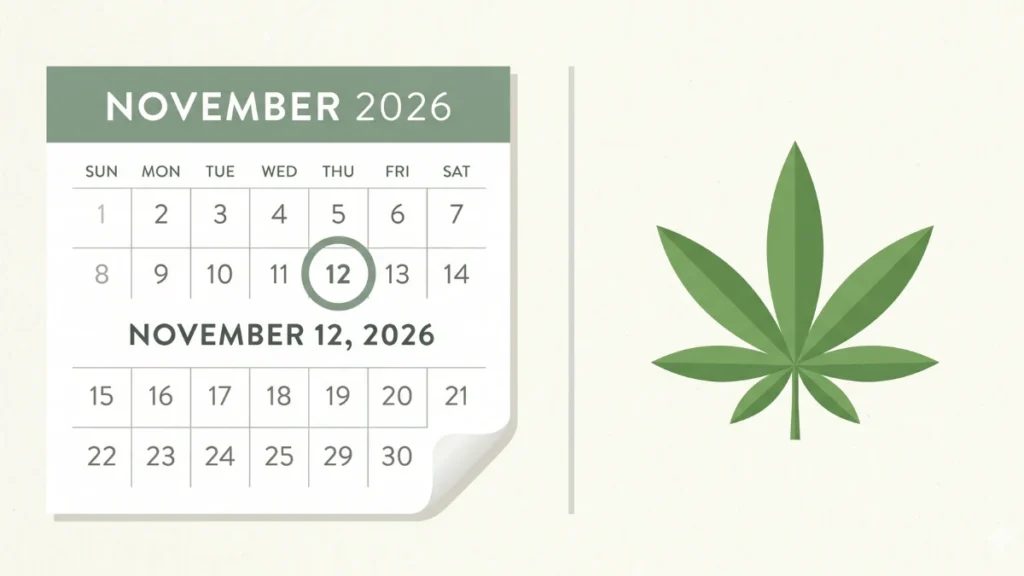
If you've seen headlines about a "hemp ban" coming in 2026, here's the short version: a new federal law changes how the government defines hemp, and that change will pull many popular delta-8 products out of the "legal hemp" category. The delta 8 federal law everyone's asking about in 2026 is P.L. 119-37, and it takes effect November 12, 2026.
The longer version matters too, because the law is more specific — and less dramatic — than "everything is banned." This post breaks down what actually changes, which products are affected, and what it means if you shop at a licensed dispensary versus buying online.
If you're new to this cannabinoid, our delta-8 THC education guide covers what it is and how it differs from regular THC. Here, we're focused on the law.
What is P.L. 119-37, and why is everyone talking about a "hemp ban"?
P.L. 119-37 is a federal spending law signed on November 12, 2025. It was part of the package that reopened the federal government after a long shutdown, and most of it has nothing to do with cannabis. But tucked inside is a section — Section 781 — that rewrites the federal definition of "hemp." You can read the Congressional Research Service summary or the full public law text if you want the primary sources.
Here's why that one definition matters so much. Back in 2018, the federal Farm Bill made hemp legal and defined it by a single number: less than 0.3% delta-9 THC by dry weight. That narrow definition is what let products like delta-8, delta-10, and HHC take off. They were marketed as "hemp-derived" because they didn't cross the delta-9 line — even though many of them are psychoactive. People sometimes call this the "hemp loophole."
P.L. 119-37 closes that loophole. That's the change driving the "hemp ban" coverage.
What does the new law actually change?
There are three real changes worth understanding, according to the Congressional Research Service:
1. It switches from "delta-9 only" to "total THC." Instead of measuring just delta-9, the new definition counts total THC — including THCA, delta-8, and other THC forms — and still holds the line at 0.3% by dry weight. Because more compounds now count, many products that passed the old test won't pass the new one.
2. It adds a per-container cap. Finished hemp products can contain no more than 0.4 milligrams of total THC per container — meaning the whole package, not per serving. For comparison, a single hemp THC gummy on the market today often contains several milligrams on its own. That's a big gap.
3. It excludes lab-made cannabinoids. The law carves out cannabinoids that aren't naturally produced by the plant, or that are made or "synthesized" outside it. Most delta-8 is produced by chemically converting CBD, so this provision hits it directly, per the Congressional Research Service legal analysis.
Put together, these changes narrow what counts as legal hemp and move many products back under the Controlled Substances Act as marijuana once the law takes effect.
Which products does this affect?
The law is aimed at intoxicating hemp-derived products. Based on how the new definition is written, that generally includes:
- Hemp-derived delta-8 and delta-10 gummies, vapes, and similar products
- HHC and other lab-made cannabinoids
- THCA flower (because THCA counts toward total THC)
- High-dose hemp delta-9 gummies and drinks that clear the per-container cap
Industry trade groups estimate the change could affect a large majority of hemp cannabinoid products currently sold — the U.S. Hemp Roundtable has put the figure around 95% of the market, as reported in industry and legal coverage. That's an industry estimate, not a government count, so treat it as a ballpark.
What's mostly spared: CBD-only products with little or no THC. The gray area is full-spectrum CBD, which carries trace THC. Because the cap counts the whole container, some full-spectrum products could exceed 0.4 mg and fall outside the new definition. If you're sorting out the difference between these compounds, our THC vs. CBD guide is a good primer.
When does it take effect — and is anything still up in the air?
The effective date is November 12, 2026 — one year after signing, to give the industry time to adjust.
But a few important pieces aren't settled. The law told the FDA to publish lists of which cannabinoids count, and to define exactly what "container" means, within 90 days. As of recent Congressional Research Service reporting, those lists had not been published. Until they are, some of the fine print stays uncertain.
Enforcement is also an open question. Federal agencies have a range of tools, but it's not yet clear how aggressively the new rules will be enforced, the Congressional Research Service notes. And Congress could still act before the deadline — more on that below.
Does this change what's on dispensary shelves?
This is the question we hear most, and the answer is the part a lot of coverage skips.
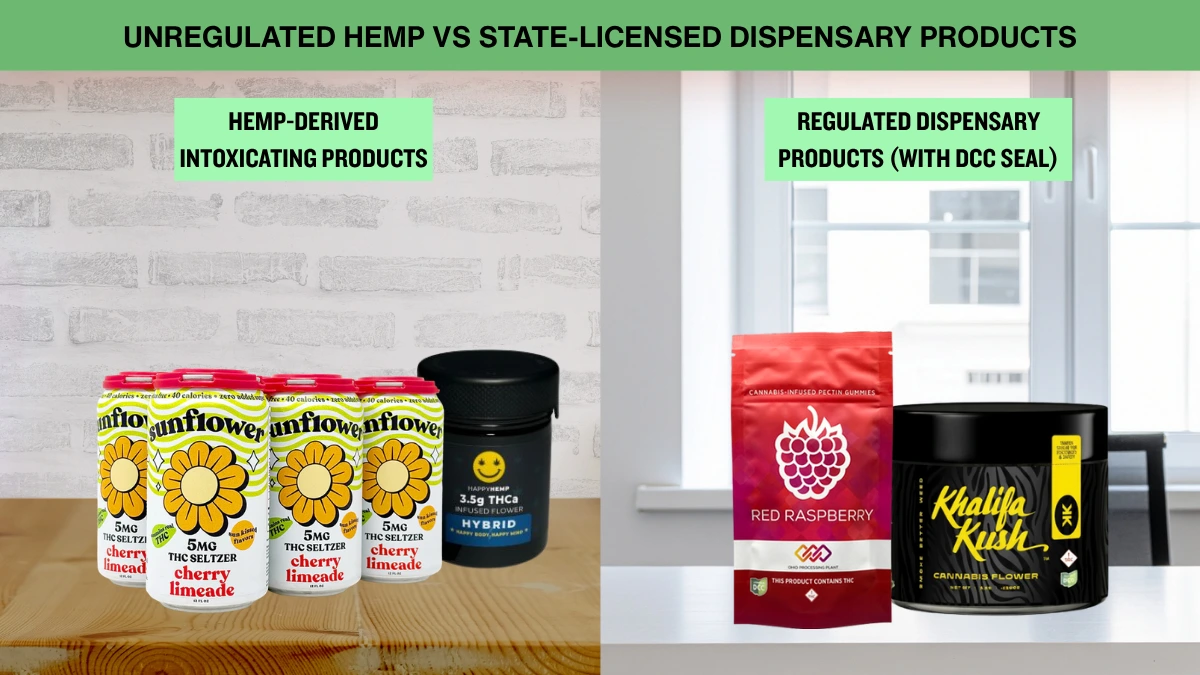
The law changes the federal definition of hemp. That's the lane that covers the delta-8 you'd find online or at a non-dispensary shop. In states where cannabis is legal, licensed dispensary products are regulated under separate state marijuana programs — a different legal track with its own testing, labeling, and oversight rules.
Our budtender Ryan sees the confusion firsthand. New customers often ask whether what we sell is the same thing they used to buy online or at non-dispensary shops. The team takes time to walk through the difference — that licensed dispensary products are regulated and lab-tested under a state program, while a lot of hemp-derived delta-8 has been sold with far less oversight.
Laws vary by state, so the specifics depend on where you live. If you're in Ohio, our delta-8 in Ohio breakdown covers the state-level details. And if you're looking for a licensed dispensary near you, you can find Bloom locations across Ohio and Maryland.
What should shoppers watch before November 2026?
A few things could still shift the picture:
- Bills to repeal, delay, or replace the provision. Several proposals are in play — some to repeal Section 781 outright, one to push the effective date later, and another to replace the ban with a regulated framework with age limits and per-serving THC caps. As of recent reporting, none had passed, per the Congressional Research Service.
- The FDA's pending lists. Once published, they'll clarify exactly which cannabinoids are covered.
- State responses. Some states are moving on their own timelines, which can change what's available where you live before or after the federal date.
The practical takeaway: nothing changes overnight, the federal date is November 12, 2026, and the details are still moving. If you have questions about a specific product, a licensed dispensary is a good place to get a straight answer.
Frequently asked questions
Is delta-8 still legal right now?
As of now, the federal definition change in P.L. 119-37 hasn't taken effect — it's scheduled for November 12, 2026. State laws on hemp-derived delta-8 vary widely, and some states already restrict or ban it, so the answer depends on where you live. Check your local regulations.
Will the new law affect CBD products?
CBD-only products with little or no THC are largely unaffected. The wrinkle is full-spectrum CBD, which contains trace THC. Because the law sets a 0.4 mg total-THC cap per container, some full-spectrum products could exceed that limit and fall outside the new federal hemp definition.
Does this change what licensed dispensaries sell?
The law targets the federal definition of hemp, which covers hemp-derived products like the delta-8 sold online and in non-dispensary shops. In states where cannabis is legal, licensed dispensary products are regulated under separate state marijuana programs, so they sit on a different legal track.
This article is for informational purposes only and is not medical advice. Cannabis affects individuals differently. Consult a qualified healthcare provider before using cannabis, especially if you have a medical condition, are pregnant or breastfeeding, or take prescription medications. Cannabis laws and available products vary by state — check your local regulations. Do not drive or operate machinery while using cannabis. Keep cannabis products out of reach of children and pets.
