
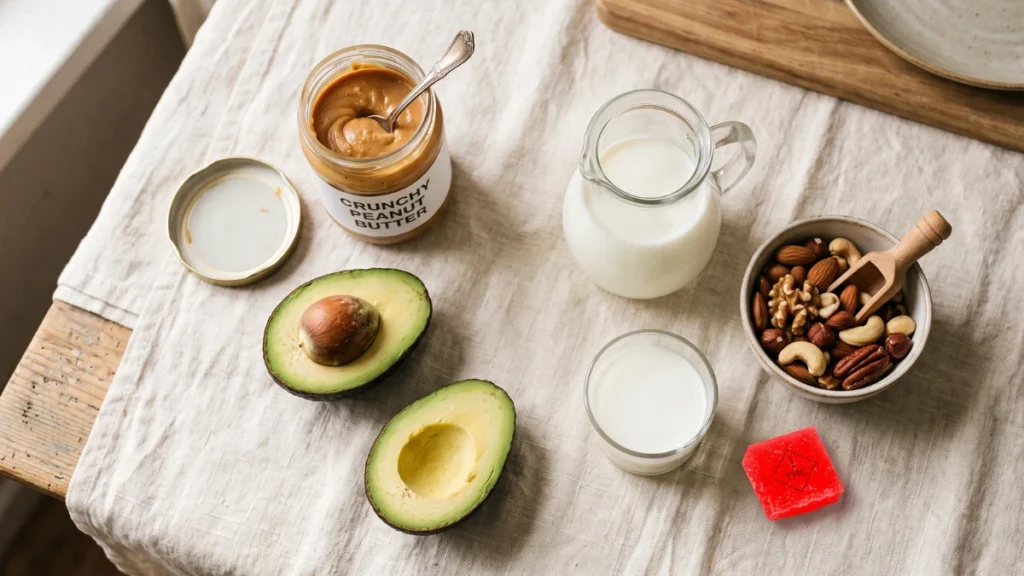
Yes, what you eat can change how an edible hits you — but only one food group has real evidence behind it, and it's probably not the one you've heard about.
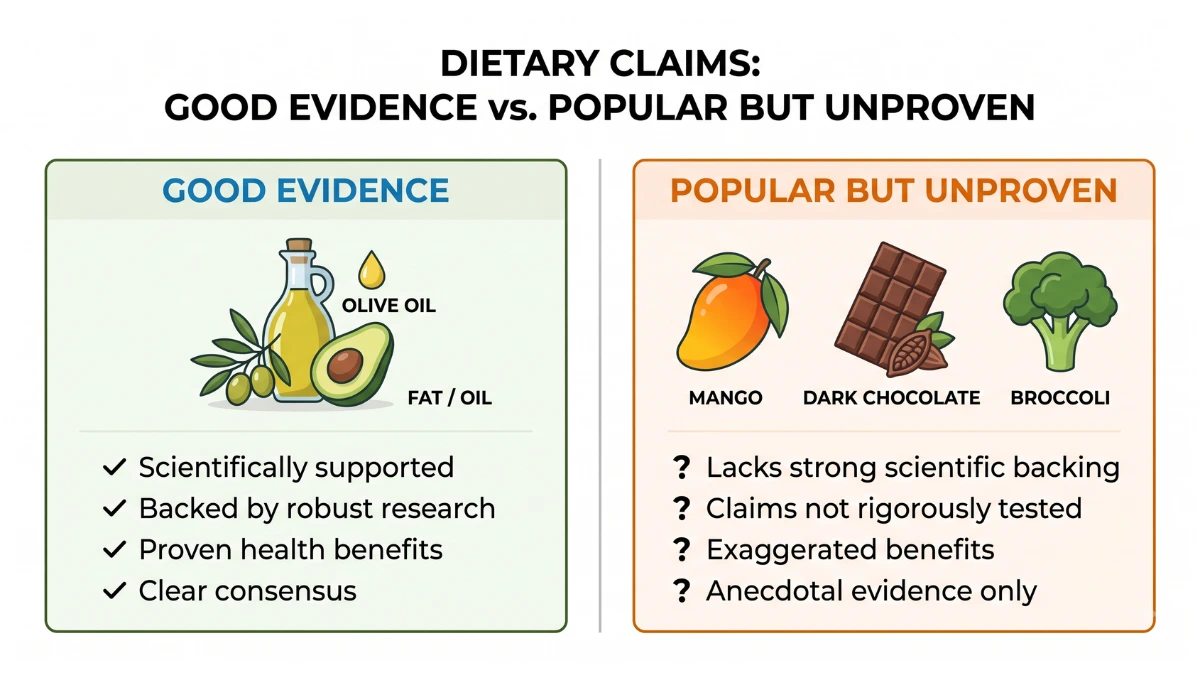
Fat is the answer. Cannabinoids dissolve in fat, and eating fat alongside an edible can meaningfully increase how much THC your body actually absorbs. The mango trick, the dark chocolate theory, the broccoli tip? Those are popular, repeated everywhere, and mostly unproven.
Here's what holds up, what doesn't, and what actually matters more than any of it.
Does what you eat actually change how an edible hits?
It can — but through one main mechanism, not a dozen.
When you swallow an edible, THC has to survive your digestive system and pass through your liver before it reaches your bloodstream. A lot gets lost along the way. That's why edibles are unpredictable compared to smoking or vaping.
Fat changes that math. THC is lipophilic, meaning it binds to fats rather than dissolving in water. When fat is present during digestion, more THC gets carried into your system instead of being broken down and passed through.
That's the whole story of "foods that boost your high." Everything else you'll read online is either an extension of this idea or folklore built on a compound that sounds related but doesn't behave the way people claim.
If you're new to edibles generally, our guide to cannabis edibles covers how they work and what separates the different formats.
Why fat is the one food that reliably changes an edible
The research here is genuinely encouraging, with one honest caveat.
A 2016 study found that taking cannabinoids alongside dietary fats substantially increased how much THC and CBD entered the bloodstream — but that work was done in rats, not people.
The human evidence is stronger for CBD. In a study of adults taking oral CBD capsules, taking the dose with a high-fat meal dramatically raised peak blood levels compared to taking it on an empty stomach. Same absorption pathway, same principle — just measured with a different cannabinoid.
So the honest summary: the mechanism is well established, the direction of the effect is consistent, and the exact size of the difference for THC edibles in humans hasn't been pinned down. It's a real effect, not a guaranteed one.
What counts as "fat" here:
- Peanut butter and other nut butters
- Nuts and seeds
- Avocado
- Whole milk, full-fat yogurt, cheese
- Olive oil, coconut oil, butter
- Eggs
You don't need a large meal. A spoonful of peanut butter or a handful of almonds is the kind of thing budtenders actually suggest.
Does peanut butter really make edibles hit harder?
This is the single most common version of the question, and the answer is: probably yes, for a fairly boring reason.
Peanut butter isn't special. It's just dense in fat, easy to eat, and convenient to have right before a gummy. It works for the same reason avocado or whole milk works — the fat content, nothing unique to peanuts.
You'll sometimes see people claim peanut butter is uniquely good because of a specific compound in it. There's no solid evidence for that. Fat is doing the work.
One of our budtenders, Jenny G., gets this question constantly:
"Customers ask if peanut butter will enhance their high. I tell them there's a good chance it will, because of the fat content — that helps transport more THC through your body as it binds to the fat. But always remember there are a lot of other variables in how THC affects you. Don't get stuck on food alone. Your mindset and your overall health play a role too."
That last point matters more than most people expect, and we'll come back to it.
Does eating a mango before an edible make it stronger?
This is the most repeated claim in cannabis culture, and it's the weakest one on this list.
The theory: mangoes contain myrcene, a terpene also found in cannabis. Eat a mango an hour before, the story goes, and the myrcene helps THC cross into your brain more efficiently.
Here's the problem. No human study has tested whether eating mango changes a cannabis high. The claim is an extrapolation from what myrcene does in lab settings, stretched into a specific real-world prediction nobody has actually measured. And the amount of myrcene in a mango is very small compared to the doses used in that lab research.
Could it do something? Maybe. Is there evidence it does? Not really.
Eat a mango because mangoes are good. Just don't count on it changing your experience. If you're curious about how terpenes work more broadly, our terpene guide explains what they actually do and don't do.
What about chocolate, broccoli, sweet potatoes, and tea?
These all show up on "foods that boost your high" lists. Each has a kernel of real science that gets stretched past what it supports.
Dark chocolate. Chocolate contains trace amounts of compounds chemically similar to your body's own cannabinoids. The amounts are tiny — far too small to plausibly amplify a THC dose. Chocolate might genuinely improve your mood, which can shape how an experience feels. That's not the same as making an edible stronger.
Broccoli and black pepper. Both contain beta-caryophyllene, a terpene that does bind directly to CB2 receptors — which is genuinely interesting. But CB2 receptors sit mostly outside the brain and aren't the ones responsible for feeling high. THC's psychoactive effects run through CB1. So beta-caryophyllene is a real dietary cannabinoid, and it still probably won't make you feel higher.
Sweet potatoes. The claim is that their B vitamins and antioxidants smooth out the experience. There's no research connecting them to cannabis effects. They're a nutritious snack.
Green and black tea. Tea contains catechins with some receptor activity in lab studies. Same gap as everything above — nothing showing it changes a real cannabis experience.
None of these will hurt you. Just don't build a plan around them.
Stronger or faster? They aren't the same thing
A lot of people searching for this are actually asking two different questions, and the answers differ.
Faster is about how quickly the edible reaches your bloodstream. An empty stomach usually means a faster onset — sometimes noticeably faster. Chewables and drinks tend to come on quicker than dense baked goods.
Stronger is about how much THC gets absorbed overall. That's where fat helps.
Here's the catch: these can pull against each other. Eating a fatty meal alongside an edible may increase total absorption while also slowing the onset, because your stomach empties more slowly when there's food in it.
So "peanut butter makes edibles kick in faster" is likely backwards. Fat may make an edible stronger, not quicker. If anything, it can delay things.
This is exactly how people end up taking a second dose too soon. If you want a sense of normal timing, our guide to how long a cannabis high lasts walks through onset and duration for different products.
Should you take an edible on an empty stomach?
It depends on what you're after, and there's a real tradeoff.
Empty stomach: faster onset, often a sharper come-up. Some people find it more intense at first, but the experience can feel less even. Some also find edibles on an empty stomach cause mild nausea.
With food, especially fatty food: slower onset, potentially more total absorption, and a smoother curve for many people.
Neither is wrong. What matters is knowing which one you chose, because the same 10mg gummy can feel like two different products depending on that decision. If you took it on a full stomach and nothing's happening at the 45-minute mark, that's expected — not a sign to take more.
What can make an edible feel weaker?
Less discussed, but useful.
- A very large, heavy meal. Beyond a certain point, a big meal can slow everything down enough that the onset drags and the peak feels blunted.
- Regular, frequent use. Tolerance affects your experience far more than any food does.
- An old or poorly stored product. THC degrades with heat, light and time. A gummy that's been in a hot car all summer isn't the same gummy.
- Expecting too much. If you're waiting for a specific intensity, a normal experience can feel underwhelming.
Nothing you eat will meaningfully cancel an edible once it's absorbed.
The honest answer: food isn't the main lever
If you want an edible to hit harder, food is a minor adjustment. Three things matter much more.
Dose. This is the big one. The difference between 5mg and 10mg dwarfs the difference between eating peanut butter and not. If your current dose isn't doing what you want, that's the variable to look at — carefully, and in small steps. Our edibles dosage guide covers how to think about that without overshooting.
Product and format. How an edible is made affects absorption before you eat anything alongside it. A budtender can tell you which products on the shelf tend to come on faster or sit heavier.
You. Your metabolism, tolerance, body composition, how much you've slept, and what kind of headspace you're in all shape the experience. As Jenny G. put it, your mindset and overall health are part of the equation. She also mentions that gym-goers sometimes tell her edibles feel stronger after a workout — an interesting pattern budtenders hear a lot, though it hasn't been studied enough to say whether it's the exercise or the mood that comes with it.
And a practical note in the other direction: chasing a stronger effect is how most uncomfortable edible experiences start. Going up in dose is easy; coming back down isn't. If you ever do overshoot, what to do if you're too high is worth reading before you need it.
Common questions about food and edibles
How long before an edible should I eat something fatty?
Most people eat the fat with the edible or shortly before — within about 30 minutes. The goal is having fat in your system while the edible is being absorbed, not hours ahead.
Can food make an edible last longer?
Possibly. More absorption can mean a longer experience as well as a stronger one. But duration depends far more on dose, product and your own metabolism than on what you ate.
Does drinking alcohol with an edible make it stronger?
Combining alcohol with cannabis can make effects feel more intense and harder to predict. If you're trying to control how an edible hits, alcohol works against you.
What should I eat if an edible hits too hard?
Food won't reverse an edible that's already absorbed. Focus on water, a calm setting, and time. The effects fade on their own.
This article is for informational purposes only and is not medical advice. Cannabis affects individuals differently. Consult a qualified healthcare provider before using cannabis, especially if you have a medical condition, are pregnant or breastfeeding, or take prescription medications. Cannabis laws and available products vary by state — check your local regulations. Do not drive or operate machinery while using cannabis. Keep cannabis products out of reach of children and pets.
