
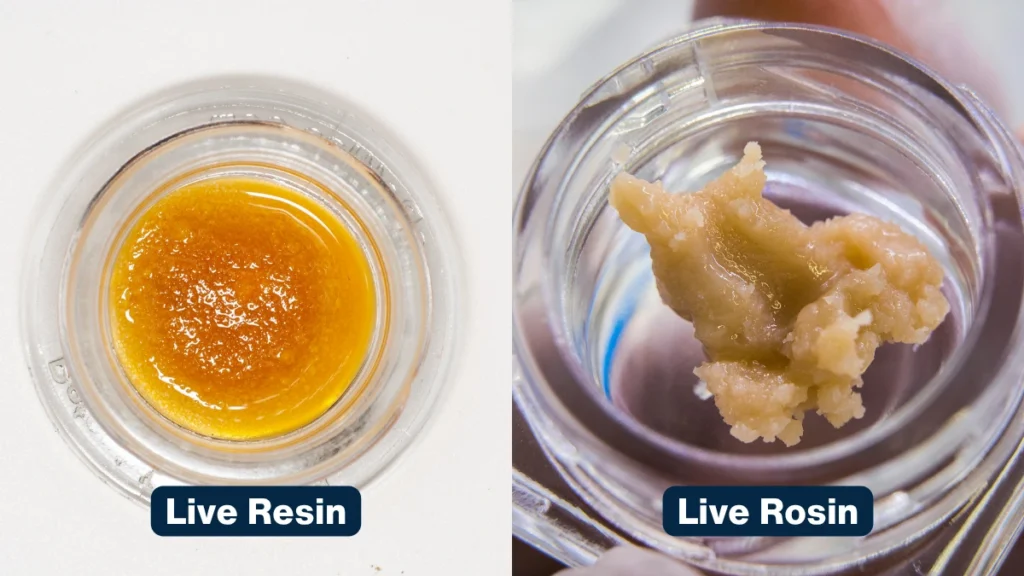
If you've browsed a concentrates menu lately, you've probably seen both live resin and live rosin on the shelf — often side by side, often at noticeably different price points, and almost never with a clear explanation of what actually separates them. Both start from the same raw material: fresh-frozen cannabis flower, harvested and immediately frozen to lock in its natural cannabinoids and terpenes. But what happens next is where they split, and that split drives every meaningful difference between them — flavor, texture, price, and who each product is really built for.
Here's a plain-English breakdown, plus a practical framework for choosing the one that fits what you're looking for.
What is live resin?
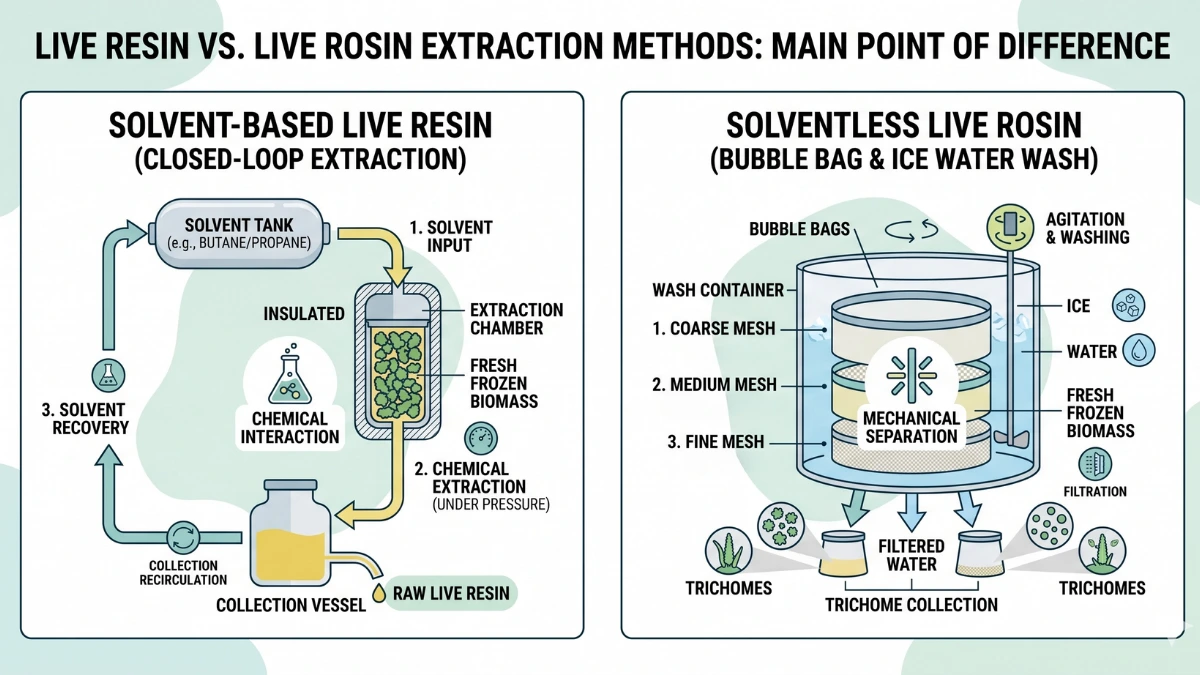
Live resin is a cannabis concentrate made by extracting cannabinoids and terpenes from fresh-frozen flower using chemical solvents — most commonly butane or a butane-propane blend. The "live" part of the name refers to the starting material: by skipping the traditional drying and curing process and going straight from harvest to frozen, producers preserve a fuller snapshot of the plant's original chemistry before any degradation sets in.
Because solvents are efficient at pulling a wide range of compounds from plant material, live resin can be processed into several different textures after extraction. You'll find it sold as sauce (a chunky, slightly liquid concentrate with visible crystal structures), sugar (a gritty, wet-sand texture), budder (smooth and whipped), and in vape cartridges. That variety in format is a big part of why live resin has become one of the most widely available concentrate types on the market.
If you're newer to concentrates and want a broader look at the category before diving into specific types, Bloom's cannabis concentrates guide covers the full landscape.
What is live rosin?
Live rosin starts in the same place as live resin — fresh-frozen flower — but gets there through a completely different process. No chemical solvents are involved at any step. Instead, the fresh-frozen material is washed with ice water, which causes the trichomes (the resin glands that hold most of the plant's cannabinoids and terpenes) to break away from the plant matter and collect at the bottom of the wash vessel. That material is gathered, dried, and pressed using carefully controlled heat and pressure to yield live rosin.
The result is a concentrate that many consumers describe as the most faithful representation of the original cannabis plant — the aroma, the flavor, and the full-spectrum character that was present before any chemical process touched it.
How they're made: the key difference
The core distinction between live resin and live rosin comes down to one thing: whether a chemical solvent is part of the extraction.
Ashley, one of our budtenders, describes it this way: "The main difference between live resin and live rosin is the way in which they are made. Live resin uses chemical solvents like butane to extract the cannabinoids and terpenes from the flower, while live rosin uses only ice water, heat, and pressure."
That single difference in method creates a ripple effect across the finished product — what compounds are preserved, what textures are possible, and what kind of experience ends up in the jar.
How live resin and live rosin compare
Terpene preservation
Both live resin and live rosin use fresh-frozen flower specifically because fresh-frozen retains more of the plant's natural terpene profile than dried, cured material does. Terpenes are the aromatic compounds responsible for the flavor and aroma of cannabis — and they also interact with cannabinoids in ways that may shape the overall experience. You can dig into the science of that relationship on Bloom's cannabis terpenes page.
In practice, solventless extraction tends to preserve a more intact, nuanced terpene profile because there are no chemical inputs interacting with the plant's compounds during processing. Live resin, while still terpene-rich compared to non-live concentrates, goes through a chemical step that can shift the final terpene composition.
Potency
Live resin and live rosin can both test at high THC percentages — there's no categorical winner between the two. Live resin's solvent-based extraction does give producers more flexibility in how the final product is processed, and some formats (like certain carts and sugar concentrates) are formulated to emphasize potency. But live rosin can also be very high-potency when the starting material and pressing process are dialed in. Batch quality and brand matter more than the category label.
Texture variety
Live resin has a clear edge here. Because it can be worked after extraction — whipped into budder, left to develop into sugar, mixed into sauce, or loaded into cartridges — you get a wider menu of textures and use cases. Live rosin typically comes in fewer formats: most often a hash-y, creamy or slightly waxy consistency, sometimes pressed into rosin badder.
True-to-plant character
This is where live rosin tends to stand apart. Because no solvents touch the plant material at any point, many consumers and producers describe the flavor and aroma of live rosin as the most faithful to what the living plant actually smelled and tasted like. Ashley calls it "the closest true-to-plant experience," which is why it tends to be the choice for people who prioritize flavor complexity and prefer to know exactly what went into their product.
Why live rosin typically costs more
The price difference between live rosin and live resin isn't arbitrary — it reflects how much more labor-intensive the solventless process is. The ice water wash requires careful technique and equipment to maximize trichome recovery without damaging the plant material. The collected bubble hash then needs to be dried thoroughly before pressing, adding another stage. And because the whole process depends on mechanical separation rather than chemical efficiency, the yield of finished product per pound of starting material is lower.
All of that labor, precision, and lower output gets reflected in the shelf price. It's a direct result of how the product is made.
Which one should you choose?
The right answer depends on what matters most to you.
Ashley's take covers it cleanly: "Customers who prefer a chemical-free product with the closest true-to-plant experience choose live rosin. If you prefer a higher THC product or a variety of different textures like sugar and budder, live resin is the choice."
If you're drawn to the solventless process, care about flavor complexity, and want a product that stays as close to the original plant as possible, live rosin is worth the price premium. If you're looking for format variety — different textures, concentrations, and a wider range of price points — live resin gives you more options to work with.
Both are premium products compared to standard concentrates. The real difference is in philosophy and format, not in one being better than the other in an absolute sense.
If you're in Ohio and want to see what's currently available, Bloom's guide to the best cannabis concentrates in Ohio is a good starting point for what's on shelves.
Frequently asked questions
Is live resin stronger than live rosin?
Not necessarily. Both can produce high-potency concentrates, and THC percentages vary by batch, brand, and product type. Live resin offers more texture formats — some of which are processed to emphasize potency — but live rosin can also be very potent depending on the quality of the starting material and the precision of the pressing process. Potency is a batch-by-batch question, not a category-level one.
Is live rosin safe to consume?
Live rosin is made without chemical solvents — only ice water, heat, and pressure are used in extraction. This makes it attractive to consumers who prefer to avoid residual solvent exposure. As with any cannabis concentrate, if you're new to the format, start with a small amount and increase gradually.
What's the difference between live resin and regular resin?
Regular resin — sometimes called cured resin — is made from dried and cured cannabis flower rather than fresh-frozen. Drying and curing causes some terpene loss, so cured resin products tend to be less aromatic and flavorful than their live counterparts. Live resin's fresh-frozen starting material captures more of the plant's original profile before any degradation occurs.
What's the difference between live rosin and regular rosin?
Regular rosin uses dried, cured flower or hash as starting material and is pressed with heat and pressure. Live rosin begins with fresh-frozen flower, which is first processed into bubble hash before pressing. The fresh-frozen input preserves more terpenes, giving live rosin a fuller, more complex flavor profile than standard rosin.
