

You took too much. Maybe it was an edible that hit harder than expected, or a vape pen that went one puff past comfortable. Now the room feels strange, your heart is racing, and you just want it to stop. You're not in danger, but you'd really like to know how to sober up from weed faster.
Here's the honest answer: you can't flip a switch and delete a cannabis high. But you can make the next 30 to 90 minutes significantly more manageable. What you're experiencing has a name — greening out — and it happens to beginners and experienced users alike. It's temporary, it's not a medical emergency, and there are a handful of things that actually help (along with a few popular tips that don't).
The short answer: what helps you sober up from weed faster
If you're reading this while actively feeling too high, start here. Details follow each point below, but the quick version:
- Find a calm, safe space. Lie down if you can.
- Chew two or three whole black peppercorns. There's real science behind this one.
- Drink water and eat a light snack — crackers, fruit, toast.
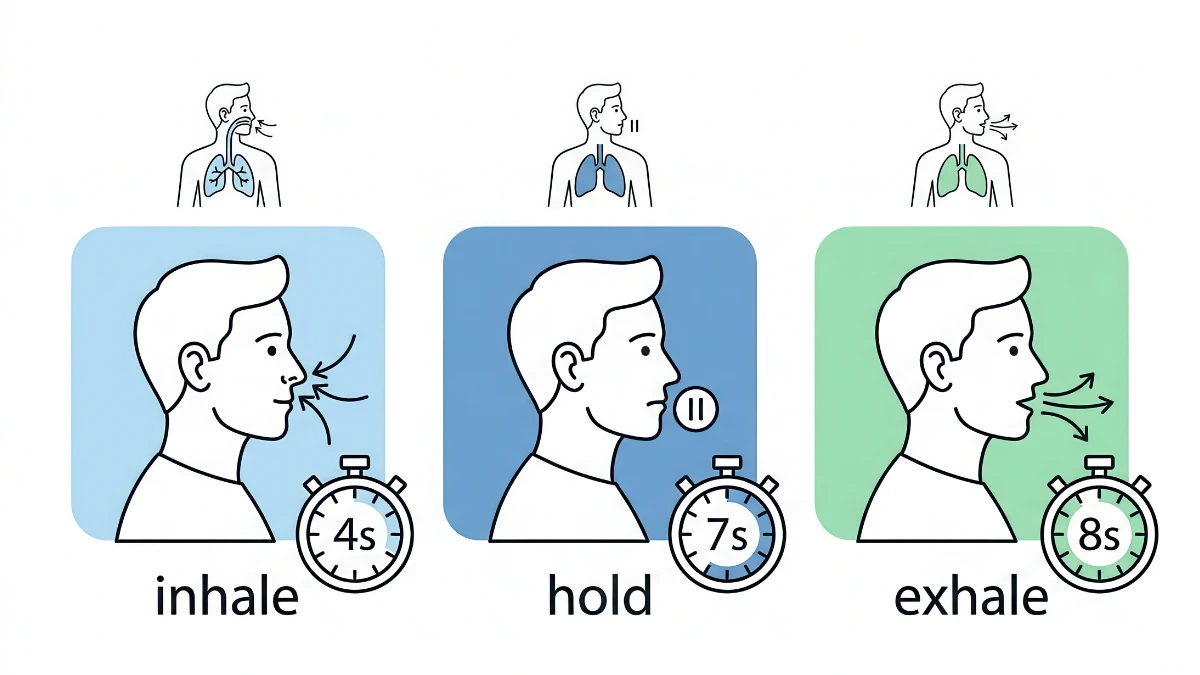
- Try slow, deep breathing: inhale for 4 counts, hold for 7, exhale for 8.
- Distract yourself with something familiar — a comfort show, a simple game, a conversation with someone you trust.
- If you have CBD on hand, try a dose. It may take the edge off.
- Wait. Most cannabis highs peak within 30 to 60 minutes and taper from there.
None of these are miracle cures. They're the things with the best combination of evidence and real-world track record. Now let's break down why each one works.
Why you feel too high in the first place
THC, the main psychoactive compound in cannabis, works by binding to CB1 receptors in your brain — receptors that are part of a larger network called the endocannabinoid system. At moderate doses, this produces the familiar effects: relaxation, euphoria, altered sense of time. At higher doses, the same system gets overstimulated, and the result can be anxiety, paranoia, nausea, a pounding heart, and an overwhelming sense that something is wrong.
Why do edibles cause greening out more often than smoking? When you eat cannabis, your liver converts THC into 11-hydroxy-THC, a metabolite that's more potent and longer-lasting than the THC you inhale. The delay between eating an edible and feeling the effects (often 30 to 90 minutes) leads people to take a second dose before the first one hits — and then both doses arrive at once.
For a deep dive on how this process works and how to dose edibles safely, see our cannabis edibles dosage guide.
What actually works — the details
Find a calm space and ride it out
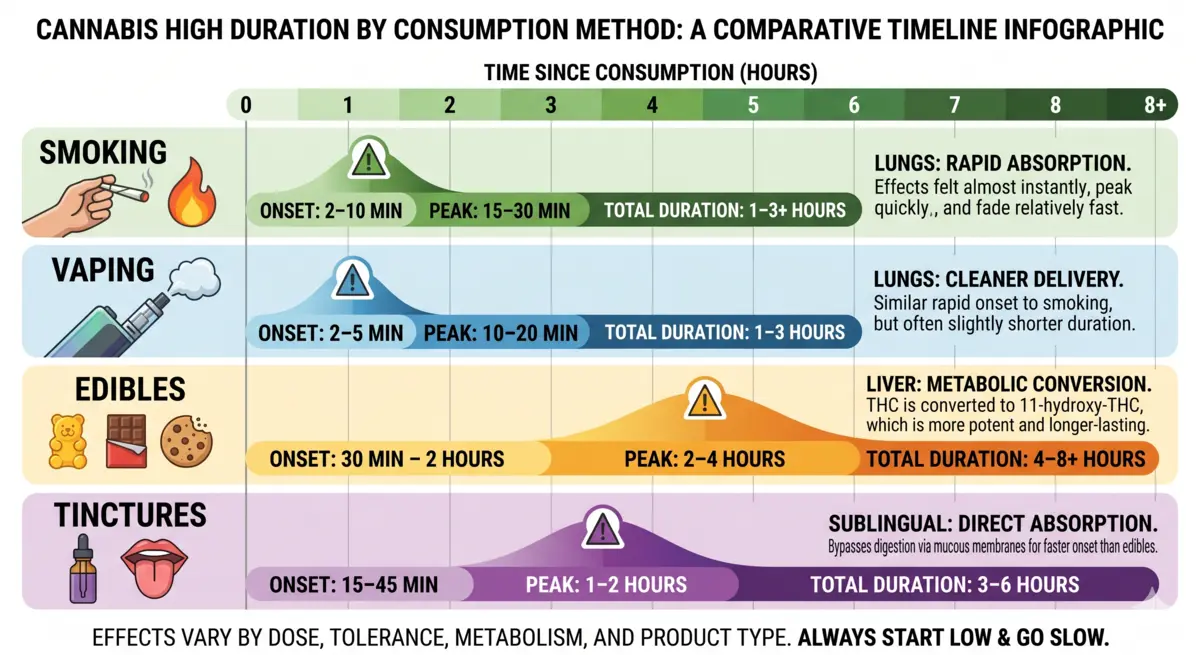
The most effective remedy for a cannabis high is time. A smoked or vaped high typically peaks within 15 to 30 minutes and fades over one to three hours. An edible high can peak at one to two hours and last four to eight hours, sometimes longer. The discomfort will pass. As Russo (2011) noted in the British Journal of Pharmacology, acute overconsumption of THC generally produces self-limited panic reactions that resolve on their own without medical intervention. (Source: Russo, E.B. (2011). British Journal of Pharmacology, 163(7), 1344–1364)
If you can, lie down somewhere quiet. Dim the lights. Close your eyes if it helps. You're not trying to fight the high — you're trying to stop feeding the anxiety loop.
Chew black peppercorns
This one sounds like internet folklore, but there's a real mechanism behind it. Black pepper contains beta-caryophyllene, a terpene that binds to CB2 receptors in the body. That interaction may help modulate the anxiety and paranoia that come with THC overstimulation. The same 2011 Russo review identified beta-caryophyllene as a high-potency CB2 agonist and flagged it as a potential "antidote" to intoxicating THC effects. (Source: Russo, 2011 — PMC3165946)
You don't need much — chew two or three whole peppercorns, or simply smell freshly cracked black pepper. It may sound odd, but enough people report relief that it's worth trying, and the worst-case outcome is a slightly spicy mouth.
For more on how terpenes interact with the endocannabinoid system, see our cannabis terpenes guide.
Try CBD
Some research suggests CBD may counteract THC-driven anxiety by acting on different receptor pathways. CBD doesn't bind strongly to CB1 receptors the way THC does. Instead, it appears to modulate how those receptors respond to THC, potentially dialing down the intensity of the high.
The evidence is promising but not settled. If you have a CBD tincture, gummy, or capsule on hand, it's worth trying. Don't expect an instant off-switch — think of it more as turning the volume from a 9 to a 6.
For a fuller breakdown of how CBD and THC interact, see our THC vs CBD guide.
Drink water and eat a light snack
Hydration helps with dry mouth and the general discomfort of being too high. A light snack — crackers, bread, fruit, anything easy — can help ground you and gives your body something else to process. This isn't a miracle cure. It's a comfort measure, and comfort matters when you're panicking.
Slow breathing for a racing heart
A fast heart rate is one of the most alarming symptoms of greening out, and it's the one that sends people down the "am I having a heart attack?" spiral. You almost certainly are not. THC raises heart rate temporarily — it's a well-documented effect.
To counteract it, try 4-7-8 breathing: inhale slowly through your nose for 4 counts, hold for 7 counts, exhale through your mouth for 8 counts. Repeat four to six times. This activates your parasympathetic nervous system — the body's built-in "calm down" circuit — and can lower your heart rate within a few minutes.
Distract yourself
The anxiety loop is the core problem when you're too high: you notice you feel weird, that makes you anxious, the anxiety makes the high feel worse, and so on. Breaking the loop is often more effective than any supplement.
Put on a show you've seen before. Play a simple mobile game. Call or sit with a friend. The goal isn't to forget you're high — it's to stop hyperfocusing on it.
What doesn't actually work (despite what the internet says)
Cold showers
Shocking your system with cold water might snap you into alertness for a moment, but it doesn't speed up THC metabolism. It can also spike your heart rate further — the opposite of what you want when you're already anxious.
Coffee
Caffeine is a stimulant. If your main symptom is anxiety and a racing heart, adding another stimulant on top of THC is not going to help. It can increase jitteriness and make paranoia worse.
Vigorous exercise
Working out when you're uncomfortably high is impractical and potentially unsafe — your coordination and balance are compromised, and your heart rate is already elevated. Light walking? Sure, if it calms you down. A full gym session? Skip it.
"Eating a huge meal"
There's a persistent belief that a big meal will somehow absorb the THC. It won't. THC is already in your bloodstream. Eating may help with comfort, but loading up on a heavy meal when you're nauseous can backfire.
How long does a weed high last?
One of the best things you can do when you're too high is set a realistic expectation for when it ends. Here's what the timeline typically looks like:
Smoked or vaped cannabis
Onset in one to five minutes. Peak effects around 15 to 30 minutes. Total duration: one to three hours for most people. If you smoked too much, you'll likely feel significantly better within an hour.
Edibles
Onset anywhere from 30 to 90 minutes (occasionally longer on a full stomach). Peak at one to three hours. Total duration: four to eight hours, with some people reporting residual grogginess up to 12 hours. This long window is exactly why edibles cause more greening-out incidents — the delay tricks people into dosing twice.
Concentrates and dabs
Onset is nearly instant. Peak within 5 to 15 minutes. Total duration: one to three hours, but the intensity is often higher than flower, which can make the experience feel overwhelming even if it doesn't last longer.
What about a weed hangover?
Some people report grogginess, mild headache, brain fog, or dry eyes the morning after heavy cannabis use. This is sometimes called a weed hangover, and while it's not well-studied, a few small studies suggest it's a real phenomenon — particularly after high-dose edibles or heavy concentrate use.
A weed hangover isn't the same as an alcohol hangover. For most people, it clears up with water, food, sleep, and a couple of hours. If it happens regularly, it may be worth reducing your dose or frequency.
Our microdosing cannabis guide covers how lower doses can deliver the benefits of cannabis without tipping into the uncomfortable range.
How to avoid greening out next time
Knowing how to sober up from weed is useful, but avoiding the problem entirely is better. A few practical rules:
- Start low, go slow. With edibles, begin at 2.5 to 5mg of THC and wait at least two hours before considering another dose.
- Read the label. Know the THC content of what you're consuming. Ask a budtender if you're unsure.
- Don't mix cannabis and alcohol. Combining the two amplifies effects unpredictably and is one of the most common causes of greening out.
- Stay hydrated. Drink water before, during, and after your session.
- Choose a comfortable setting. Your first time with a new product or a higher dose should be somewhere you feel safe, ideally with someone you trust nearby.
For a complete guide to handling overconsumption, including when to seek help, read our full what to do if you're too high guide.
Frequently asked questions
How long does it take to sober up from weed?
It depends on the consumption method. A smoked or vaped high typically fades within one to three hours. An edible high can last four to eight hours or longer. There's no way to speed up THC metabolism significantly, but the strategies above can make the wait much more comfortable.
Can you sober up from weed faster with food or water?
Food and water won't accelerate how quickly your body processes THC — the compound is already in your bloodstream. But both can ease secondary symptoms like dry mouth, low blood sugar, and general discomfort, which makes the experience feel more manageable.
Does CBD counteract THC?
Research suggests CBD may reduce some of the anxiety and paranoia associated with THC, likely by modulating how CB1 receptors respond. It's not a guaranteed off-switch, and the evidence is still developing, but it's one of the more credible options if you have CBD on hand.
How long does greening out last?
Most greening-out episodes peak within 30 to 90 minutes and resolve within a few hours. Edible-related greening out can last longer — up to four to eight hours in some cases. The discomfort typically passes well before the high itself fully fades.
Can you die from greening out?
No. There are no documented cases of a fatal overdose from cannabis alone. What greening out produces — anxiety, nausea, rapid heart rate, paranoia — is extremely uncomfortable but not life-threatening. If you're experiencing chest pain, severe vomiting, or loss of consciousness, seek medical attention — not because of the cannabis itself, but because those symptoms warrant evaluation regardless of cause.
Does Narcan work on weed?
No. Narcan (naloxone) reverses opioid overdoses by blocking opioid receptors. THC operates on a completely different receptor system (cannabinoid receptors, not opioid receptors). Narcan has no effect on a cannabis high.
You're going to be fine
If you're reading this while too high, the most important thing to hear is that what you're feeling is temporary. It will pass. It always does. Use the strategies above to make the wait easier, and when you're feeling better, come back and read the prevention section so it doesn't happen again.
For the full picture on managing overconsumption, read our complete what to do if you're too high guide.
